Explore the shift from autism awareness to understanding, and how fostering inclusive environments can unlock the potential of autistic individuals in the workplace.
I was 16 when Rain Man, a movie about two estranged brothers, was released in 1988. One of the brothers, Raymond, is an autistic man with extraordinary abilities, played by Dustin Hoffman. The film is widely credited with raising awareness of autism in the community. Although it’s been criticised for stereotyping people with autism, it’s also celebrated for challenging how society viewed autism and highlighting how it failed to accommodate people with autism.
Almost 40 years later, we’re seeing a broader and more diverse representation of autism in popular culture. This includes Australian actors Michael Theo in Austin and Chloé Hayden in Heartbreak High. These two proudly autistic actors use their public profiles to not only raise awareness of autism but to deepen our understanding of it.
As we come into World Autism Awareness Month, I’ve been thinking about the importance and value of moving beyond awareness to understanding.
In 2007, the United Nations established World Autism Day, observed each year on 2 April. The aim was to raise public awareness of autism, especially of children with autism. Then in 2021, Autism Spectrum Australia (Aspect), intentionally shifted the perspective from awareness by framing this date as World Autism Understanding Day.
Explaining this shift, CEO Jacqui Borland said:
“We know that only a minority of Autistic people share their diagnosis because of how it may be perceived, so we want to help people understand how to respond if a person shares they are Autistic and how to create an inclusive space for them.”
But why is this distinction important?
Well, awareness often aligns with what is known as a medical or deficit model of disability. Too often our society goes back to this way of thinking, focusing on what is wrong with an individual and how to fix it so they can take part in society.
This is different to the social model of disability, where the focus shifts to the environment rather than the individual. People are not disabled by autism itself, but by environments that don’t cater to autistic ways of thinking, communicating, and sensing the world.
In an interview with Amaze, Chloé Hayden was asked to name one thing that should change about how non-autistic people understand autism. She said:
“See us for who we are, not for who we’re not. Unlearn your bias, your expectation, your stigmas, and instead learn from the community, from us. We are not your stigmas.”
Chloé Hayden
Understanding autism encourages us to look at things differently. For example, instead of thinking that autistic people struggle with communication, we might recognise that communication differences require flexible approaches. Instead of thinking that autistic people have sensory issues, we might consider that many environments are simply overwhelming. Instead of thinking that autistic people lack social skills, we might consider that social norms are culturally created, not universal.
At Castle, we see the importance of this shift when supporting employers who want to hire people with disability. Employers often start with a strong belief in the potential of people with disability, but the real progress comes in looking at the way their workplace, processes and expectations might need to adapt.
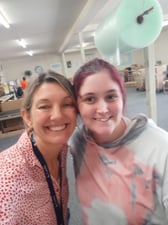 LaVida Trading, which has welcomed many neurodivergent employees like Kaitlyn, have adjusted their workplace practices to be more inclusive.
For a potential employee, this means working in an environment where the employer not only believes in their potential but has actively taken into account what needs to change for that potential to be realised.
In our experience, while motivation from employers is important, the magic comes when that motivation is followed by a willingness to rethink business models and processes that were built around a narrow definition of the “ideal employee,” and instead open up opportunities for a broader pool of talent.
In doing so, they are well on their way to achieving the vision shared by United Nations Secretary-General, António Guterres, whose message on World Autism Awareness Day 2026 is:
“Embracing diversity strengthens us all. Today and every day, let us reaffirm our common humanity and renew our commitment to a more inclusive world for all.”