Empowering women with disability in leadership roles, emphasising inclusion, personal strength, and the strategic value of lived experience in the disability sector. Main Point Summary: Nikita, Castle’s NDIS Initiatives Lead, discusses the importance of women with disability in leadership roles. She highlights the value of lived experience in shaping effective and inclusive systems within the disability sector, advocating for workplaces where disclosure does not carry professional risk and flexibility is embraced. The intersection of gender, disability, and leadership strengthens both individual careers and the sector's integrity and innovation.
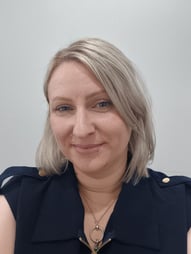
Nikita is Castle’s NDIS Initiatives Lead, focusing on improving our systems and processes to deliver best practice supports to our participants. This blog post is written for International Women’s Day 2026.
Advocacy. Inclusion. Equity. Co-Design. Lived Experience.
In the disability sector, we use these words every day and we mean them. We want people with disability to be heard. We want communities that are genuinely inclusive, not just compliant. We want systems that remove barriers before they exclude people. We talk about lived experience as something valuable, and it is. But as a professional woman living with Multiple Sclerosis, I know it’s also personal.
Every time I share that I have MS, there’s a quiet moment. There’s a split second where I weigh things up. I wonder, am I opening the door to connection or to assumption? Will people see leadership or limitation? That tension is real.
The disability sector is made up largely of women. Many of us work on the frontline and more of us are stepping into leadership roles. We bring strategy, operational expertise and strong relational skills to complex systems. And for many of us, we also bring lived experience – our own, or the experience of someone we love.
Over the years, I’ve met many women who came into this sector because of disability in their lives, such as a child, sibling, partner or parent with disability, or their own diagnosis. What begins as navigating systems out of necessity often leads to a career with purpose.
But underneath that there is a quiet balancing act. For women with disability, or women caring for someone with disability, the question of disclosure is rarely simple. Sharing can bring trust and credibility, but it can also invite doubt. Women carers may have their commitment subtly questioned. Women with disability may face unspoken concerns about stamina, productivity or leadership capability. So we’re constantly weighing up visibility against vulnerability.
Lived experience is often spoken about as something that builds compassion, but it does more than that. Lived experience builds system literacy, persistence, negotiation skills, and a deep understanding of how policy decisions play out in real life.
This is especially true in the NDIS environment, where there is often a gap between what is theoretically allowed and what is practically achievable. Women who have navigated the NDIS as participants or carers understand that gap, as they’ve sat on both sides of the table. They know what it means to be operating within regulatory constraints. They also know what it feels like to fight for reasonable and necessary supports. That dual perspective isn’t a coincidence - it’s strategic expertise.
Too often, we separate lived experience and expertise as though one is personal and the other one professional. And yet living with or alongside disability influences how we assess risk, interpret policy and make decisions. It actually deepens leadership.
When you’ve personally navigated systems, you see risk earlier, you understand access more deeply, and you design services that are practical, not theoretical.
That matters, especially in times of legislative and pricing reform. I believe lived experience sharpens your awareness of what needs to be advocated for in practical, operational ways that protect both participants and organisational sustainability.
 Chronic illness and hidden disability don’t always fit neatly into traditional models of leadership, and neither do the caring responsibilities many women carry. I’ve been questioned about working full-time while managing a chronic illness and raising children. For example, earlier in my career, a disability provider I was applying for a role with suggested I “downplay” my MS during recruitment. But when we prioritise rigid models of work over outcomes, when we focus on standardised patterns instead of what someone can deliver with the right supports, and when we put the diagnosis before the person - we exclude exceptional people who bring expertise that others simply can’t.
If we believe in inclusion externally, we need to cultivate it internally. That means creating workplaces where disclosure does not carry professional risk, flexibility is not mistaken for reduced ambition, and lived experience is recognised as expertise instead of just empathy.
When women with disability are in decision-making spaces, shaping governance, finance, risk and strategy, systems improve. Policies become more practical, risk frameworks become more nuanced, and conversations become grounded in reality.
The intersection of gender, disability and leadership is not something to manage around. It is something to value. I believe that when women can integrate all parts of who they are, we strengthen individual careers, as well as the integrity, sustainability and innovation of the disability sector itself.